
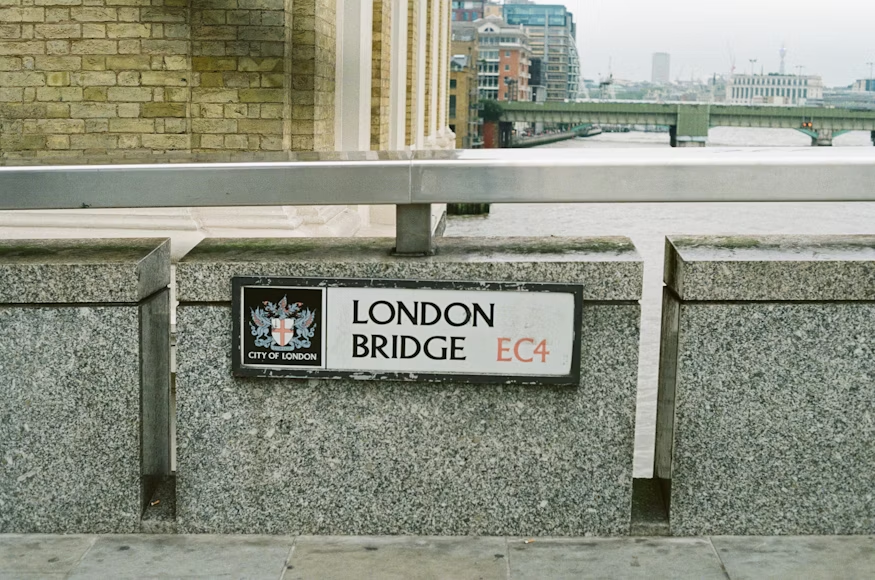
London Bridge Station stands as one of the UK’s most iconic transport hubs. With a history that dates back to the 19th century and a place at the heart of London’s rapid development, the station has become a vital artery for commuters, tourists, and residents alike. In recent years, the station has not only adapted to the technological demands of 21st-century travel, but it has also witnessed transformations shaped by the pulse of current events in the UK. This article explores London Bridge Station, weaving together historical insights, infrastructure details, the latest trends, and news that echoes through its platforms each day.
The Heartbeat of London’s Transport
London Bridge Station is more than just a railway stop; it is a symbol of the city’s enduring progress. Located on the southern bank of the Thames, it serves millions annually, acting as a focal point in Britain’s transport landscape. In the financial year April 2022 to March 2023, London Bridge was the fourth busiest station in the country, registering a staggering 47.7 million entries and exits. These numbers underscore its critical role for locals and visitors commuting for work, leisure, or events.
The station’s convenient location brings together lines from Kent, Sussex, and Southeast London, making it a crucial spot for both long-distance and short-haul journeys. With access to the Jubilee and Northern Underground lines, plus connections to key London destinations, the station sits at the intersection of rail and city life.
A Modern Marvel: Redevelopment and Innovation
London Bridge Station has undergone dramatic changes during the past decade. The state-of-the-art redevelopment completed in 2018 brought brighter concourses, improved accessibility, and a fresh architectural identity to the space. This multimillion-pound project resolved many of the long-standing problems of overcrowding, transforming the station into a modern facility that reflects both London’s tradition and innovation.
The redesign added more space, improved circulation, and streamlined connections between overground and underground platforms. The new glass-roofed concourse brings natural light to the station, creating a welcoming atmosphere. These improvements have allowed London Bridge to comfortably handle the surge in passenger numbers following Britain’s return to pre-pandemic travel habits.
In addition to physical changes, digital innovation remains a significant focus. Passengers can now access real-time updates via apps and electronic boards, ensuring they are informed about schedules, delays, and incidents at all times. The station’s integrated journey planning reinforces its position as a pioneer in passenger-centric design.
News and Current Events: London Bridge in the Spotlight
Lately, London Bridge Station has been the site of several newsworthy events, reflecting both its busy nature and importance in the community. On 30 July 2025, a near-miss incident occurred when a passenger train braked suddenly to avoid two track workers on the line. Quick action prevented injury and damage, and the incident spurred a safety investigation and digest.
Meanwhile, October 2025 saw a major launch with the unveiling of the first new national railway clock in over 50 years. This clock, installed at London Bridge, aims to enhance navigation and act as a meeting point for passengers in the large station. Standing at 1.8 metres wide, it reflects the station’s rich heritage while serving modern needs. The launch was celebrated by Network Rail, RIBA, and the Design Museum, symbolising a new era for British rail.
Incidents that attract media attention occasionally occur. In October 2025, local police investigated a security issue connected to a London Bridge service, reinforcing the area’s status as a busy centre where vigilance remains important. Additionally, memories of earlier tragic events—such as the 2017 and 2019 terrorism-related attacks—continue to shape public discourse on security and resilience in the city.
Statistics and Usage Data: A Nexus of Movement
Recent figures highlight London Bridge’s popularity and necessity. In 2023/2024, the station saw around 50 million entries and exits, ranking it third-most-used among Britain’s 2,581 stations. To put this into perspective, it outpaces Birmingham New Street and comes close after Liverpool Street, Paddington, and Waterloo, reflecting the dense footfall and ever-present need for efficiency.
Passenger numbers show steady increases over the years, particularly since the completion of redevelopment. Despite the brief fall during the pandemic, the surge in travel has resumed, and forecasts suggest this upward trajectory will continue as the population grows and urban transport becomes increasingly central to daily life.
Design and Accessibility: Meeting Modern Standards
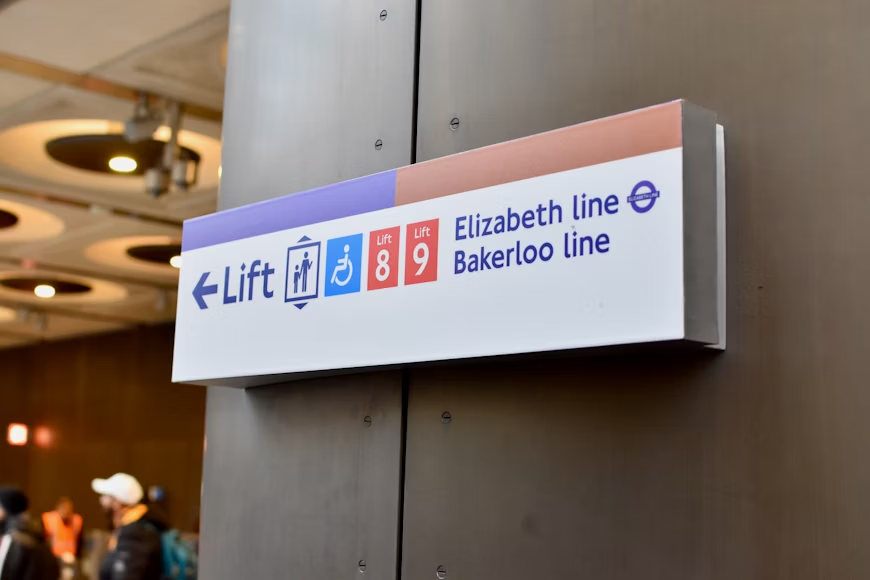
London Bridge sets the bar for accessibility in public spaces. Its concourse features clear signposting, step-free access, lifts, and wide pathways, promoting easy movement for everyone—including disabled passengers, families, and those with heavy luggage. Network Rail has actively sought to make stations across the country more inclusive, and London Bridge stands as a flagship for this mission.
The station also provides a vast selection of retail and dining options, reflecting the cosmopolitan character of the city. From quick coffee stops to sit-down eateries, there is something to suit every taste and schedule. As commuter habits change, especially with flexible working patterns, catering offerings are continually updated to match trends.
Security, Safety, and Community Impact
Safety remains paramount at London Bridge. Incidents, such as the July 2025 near-miss, have led to deep investigation and calls for increased safety measures. Train operators and Network Rail collaborate with government inspectors to maintain high standards of staff training, equipment, and protocols. Emergency procedures are regularly reviewed, with the aim of preventing future errors and safeguarding passengers.
In the wake of previous attacks, security has been strengthened, with enhanced police presence and surveillance in and around the station. The mayor’s office routinely publishes statements highlighting their ongoing commitment to public safety. These efforts are central to fostering a sense of community trust and making London Bridge Station not only a busy nexus of movement but a safe place to traverse daily.
Sustainability and Future-Proofing
Responding to environmental concerns, recent upgrades at London Bridge focus on sustainability. The station incorporates energy-efficient lighting, recycling facilities, and water conservation measures. Network Rail’s commitment to ‘greener rail’ has made London Bridge a pilot for future developments across the UK network. Encouraging use of public transport and promoting green commuting solidifies the station’s place in London’s urban strategy for years to come.
Expert Insights: Statements from Transport Officials
Transport officials and industry leaders frequently note the vital role of London Bridge in shaping Britain’s railway future. The unveiling of the new clock was seen as a landmark event, making passenger navigation easier and showcasing British creativity on a global stage.
The Office of Rail and Road regularly shares data on station usage, while the mayor’s office provides clear communication and reassurance during sensitive periods. Experts point to London Bridge as a template for how historic stations can blend tradition with cutting-edge technology.
London Bridge in Popular Culture
The station’s enduring popularity is echoed in British culture. It remains a setting for films, television programmes, and literature—often serving as a metaphor for movement, transition, or meeting. Regarded with affection and nostalgia, London Bridge Station is not just a place for trains but a gathering spot woven into the social and cultural fabric of the capital.
Life Around London Bridge: Community and Local Perspectives
The area surrounding the station is equally alive with activity. Borough Market, the Shard, and the bustling financial district fill the neighbourhood with variety and vibrancy. Retailers and restaurants within the station cater not only to passers-by but also to locals who embrace the station as part of the city’s daily rhythm.
In October 2025, business news involving nearby shops highlighted the dynamism and challenges facing the region. Starbucks, for example, announced plans to restructure, with some closures and new openings, reflecting the evolving landscape of commerce around the station.
Ongoing Projects and the Road Ahead
Looking forward, London Bridge is set to remain at the forefront of the UK’s railway system. Continuous upgrades promise even greater integration of digital technology, sustainability, and passenger experience. Future expansion and service improvements will build on the station’s legacy of adaptability and resilience.
Efforts to respond to passenger feedback, strengthen safety protocols, and improve accessibility are ongoing. Government agencies, private partners, and the local community all play roles in steering future developments.
Frequently Asked Questions (FAQs)
1. How many people use London Bridge Station each year?
Recent statistics show around 50 million entries and exits annually, making London Bridge one of the busiest stations in the UK.
2. What facilities does London Bridge Station offer?
Passengers benefit from step-free access, lifts, spacious concourses, real-time journey updates, retail outlets, dining, and enhanced security measures.
3. Has London Bridge Station been redeveloped recently?
Yes, the station underwent a major redevelopment, completed in 2018, which improved space, efficiency, and accessibility.
4. Are there safety and security measures in place at London Bridge?
Extensive safety protocols and police presence ensure the station is one of the safest in London. Recent incidents are rigorously investigated, with findings helping to update procedures.
5. How does London Bridge Station contribute to London’s sustainability goals?
The station utilises energy-efficient systems, recycling facilities, and promotes greener commuting, leading sustainability efforts across the rail network.
For more UK focused stories and trending news, check these out:
The piece above combines the latest developments, statistics, official insights, and community perspectives to give you a thorough overview of London Bridge Station in the heart of the capital.



Leave a Reply